
Storm Damage Roof Inspection in Frisco, TX
A storm damage roof inspection in Frisco, TX checks your roof after every hail or wind storm. Frisco sits in Hail Alley. Spring hail is a near-annual event in
Collin County. Frisco, McKinney, and Plano average 4.8 hail days per year, the highest in the Dallas-Fort Worth metroplex. We inspect your roof after every
storm and give you a written report with dated photos for your insurance claim.

What Hail Does to a Roof
Dime-sized hail can bruise asphalt shingles. Quarter-sized hail starts to fracture the mat. Hail over 1.5 inches causes functional damage that usually means replacement on most roofs older than a few years.

Hail knocks off the protective granules and crushes the asphalt binder. The shingle can look fine from the ground while the fiberglass mat underneath is fractured.
Soft metals show hail first: dented gutters, downspouts, vents, window screens, and the A/C condenser.
Wind creases, lifts, and tears shingles. Once a seal breaks, wind-driven rain follows.
Hail damage always follows a specific storm and shows up right away. Blistering from heat builds up slowly over months or years.
The Inspection
The inspector walks the roof and the property, checks soft metals first to confirm hail size and direction.
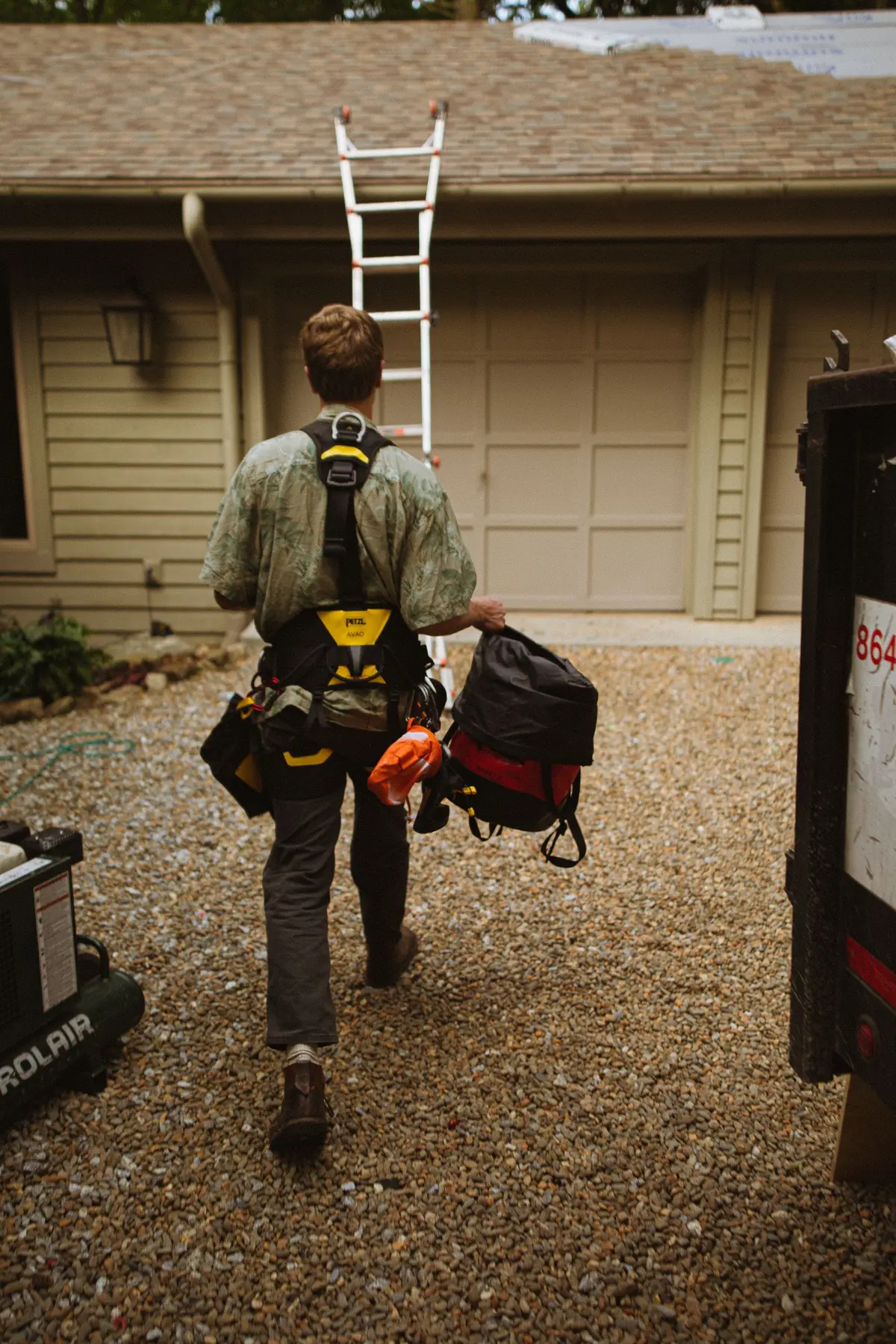
The adjuster or inspector marks a test square on each roof slope (typically 10 ft by 10 ft) and counts hail hits inside it. Most carriers need 8 to 10 hits in a test square to total a roof slope.
The inspector measures the roof, notes the pitch, number of layers, and roof age, and takes dated photos.
The homeowner gets a written report with photos. This report goes to the insurer with the claim.
The Texas Claim Process
- First 24 to 72 hours: stay safe. Check for hazards from the ground. Do not climb on a wet roof. If the roof leaks, tarp the opening and catch interior water.
- Document the storm: save weather reports showing hail at your location. Note the date, time, and hail size. Photograph damage from the ground.
- Get a professional inspection BEFORE you file. A written damage report in hand before filing produces better claim outcomes.
- File the claim: call your insurer or use their app. Give the storm date, the address, and a short factual description. Write down your claim number.
- Filing deadline: most Texas homeowner policies allow one year from the date of loss to file. Some policies allow as little as 180 days. Check your own policy.
- Meet the adjuster: the adjuster inspects the roof and writes an estimate. Have your roofer on site during the adjuster visit.
- Review the scope of loss: read the insurer’s estimate line by line. Compare it against your roofer’s inspection report.
- First payment: usually the Actual Cash Value (ACV) payment, minus your deductible. If your policy pays Replacement Cost Value (RCV), the rest comes after the work is done.
- Schedule the work: the roof work itself usually takes 1 to 2 days. Send final invoices and photos to close the claim.
- Timeline: a clean claim runs 60 to 120 days from storm to finish. Contested claims can run six months or more.
Texas Rules Every Homeowner Should Know
You owe your deductible. A roofer cannot legally waive, rebate, or absorb your deductible in Texas. Under Texas Business and Commerce Code Section 27.02, it is a criminal offense for a contractor to offer to do so.
Contractors can discuss estimates and technical details with an adjuster, but they may not act as your adjuster. The claim decision stays between you and your insurer.
If a claim is denied or comes in low, you can ask for a re-inspection or a formal scope review. You can also file a complaint with the Texas Department of Insurance (TDI), which offers consumer help at 800-252-3439.
A claim for damage that does not justify one can work against you. That is why the inspection comes before filing.
Under Chapter 542 of the Texas Insurance Code, the insurer must acknowledge the claim within 15 days and accept or reject it within 15 business days after the investigation.
Frequently Asked Questions
What should I do right after a hailstorm?
Stay safe and check for hazards from the ground. Do not climb on a wet roof. If the roof leaks, tarp the opening and catch interior water. Photograph damage from the ground, then call for a professional inspection.
How do I know if hail damaged my roof?
Look at soft metals first: dented gutters, downspouts, vents, and the A/C unit. On the roof, hail bruises shingles and knocks off granules. The damage is often invisible from the ground, so a professional inspection is the only sure check.
Should I file an insurance claim right away?
No. Get a professional inspection first. A written damage report before filing produces better claim outcomes. If there is not enough damage for a claim, a good roofer tells you honestly so you do not file a claim you do not need.
How long do I have to file a hail claim in Texas?
Most Texas homeowner policies allow one year from the date of loss. Some allow as little as 180 days. Check your own policy. Do not wait until interior damage appears.
What does the insurance adjuster look for?
The adjuster walks the roof, checks soft metals, marks a test square (usually 10 ft by 10 ft) on each slope, and counts hail hits. Most carriers need 8 to 10 hits in a test square to total a slope. They also measure the roof and note its age and pitch.
Should my roofer be there when the adjuster visits?
Yes. Having your roofer on site during the adjuster visit usually produces better agreement on the scope than letting the adjuster inspect alone.
What is the difference between ACV and RCV?
ACV (Actual Cash Value) is the roof’s value after depreciation. RCV (Replacement Cost Value) is the full cost to replace it. The first payment is usually ACV minus your deductible. The rest comes after the work is done, if your policy pays RCV.
Do I have to pay my deductible?
Yes. Texas law requires you to pay your own deductible. A contractor cannot waive, rebate, or absorb it. Under Texas Business and Commerce Code Section 27.02, it is a criminal offense for a contractor to offer to do so.
What if my claim is denied or comes in too low?
Ask for a re-inspection or a formal scope review. You can also file a complaint with the Texas Department of Insurance (TDI), which offers consumer help at 800-252-3439.
How long does a hail claim take?
A clean claim runs 60 to 120 days from storm to finish. Contested claims can run six months or more. The roof work itself usually takes 1 to 2 days once the claim is settled.